Strategic Planning Facilitation for B2B Leadership Teams
You Can’t Facilitate a Fight You’re In
You have opinions about where this company goes next. Strong ones. You should. But the CEO who’s fighting for a position can’t also run the room where positions get decided. Every time you step out of the argument to manage the process, your argument loses. Every time you push your argument, the process loses.
That’s why you hire a facilitator. Not to have better ideas than your team. To make sure the room actually decides.
Two days onsite·$12,500 + travel
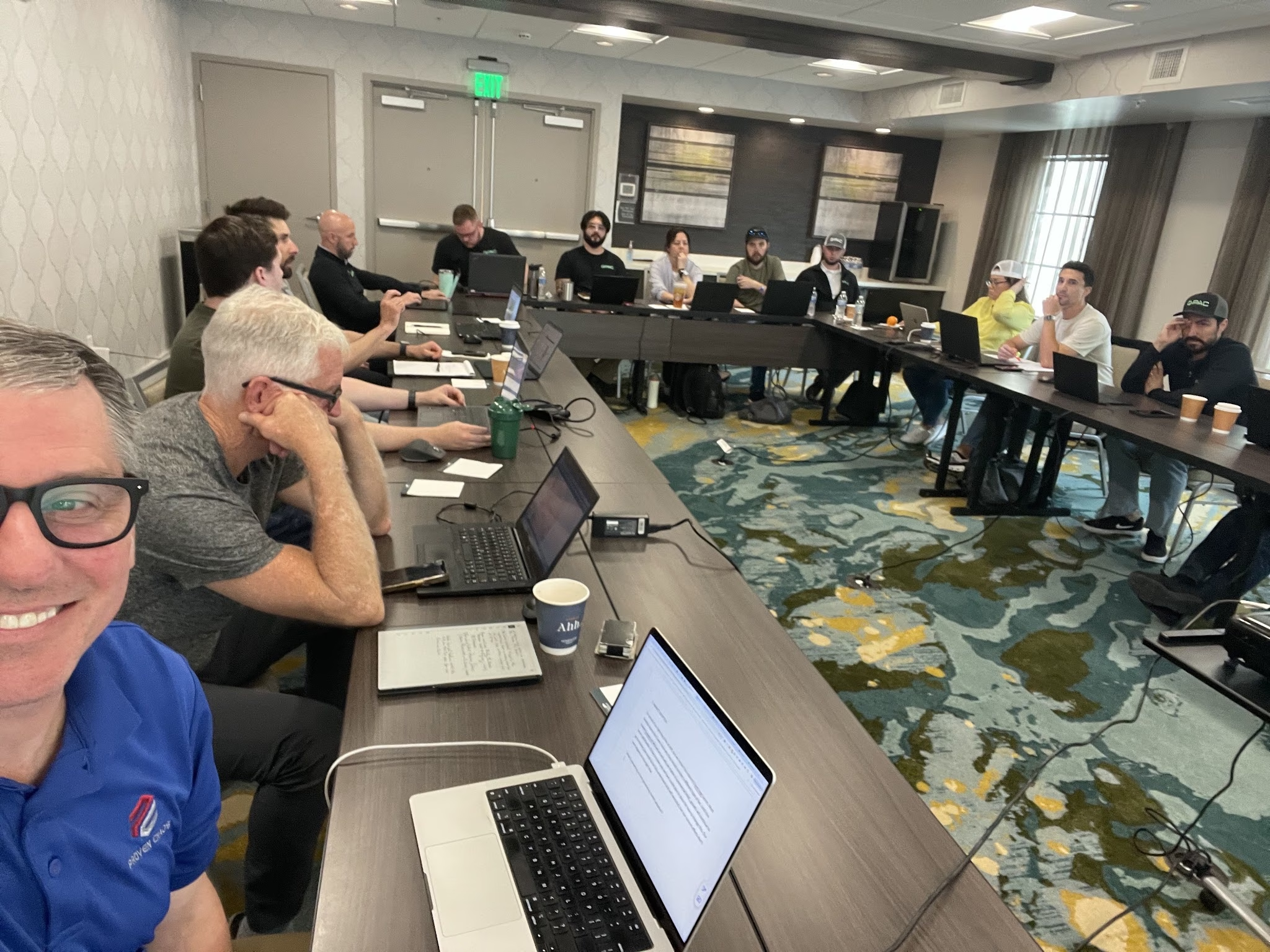
“Last year’s offsite was a $30K bonding trip.”
A CEO said that to me with a straight face. Two days at a resort. Good energy. Big flip charts. Everyone agreed on everything.
By Q2, nothing had changed. Not one thing.
Here’s the uncomfortable truth: the offsite didn’t fail in Q2. It failed in the room, the moment everyone agreed too easily. Real strategy has losers. Projects that die. Departments that wait. Comfortable habits that end. If nobody flinched at your offsite, nothing was actually decided.
Your team didn’t push back in the room. They pushed back in the hallway, quietly, for six months. That’s Stealth Stalling at work: momentum killed by something that looks productive. At planning time, the disguise is agreement, and it kills more plans than bad strategy ever will.
This isn’t a retreat. Everyone arrives ready to present.
The two days work because of what happens before them.
I do my homework first. Before the offsite, I meet with your key leaders one on one and go through your financials. I find the disagreements everyone’s been polite about. They’re the agenda. Then I build the agenda for your company, not from a template.
Your team does theirs. Every participant gets prework, and nobody walks in cold:
- Seed questions to get their minds on what’s possible next quarter and next year.
- An honest read on their own area: how effective was it last quarter, where are the gaps, how are they using their resources.
- A review of the objectives and projects they owned, and what they’d do differently.
- A first draft of their area’s plan for next quarter, ready to present.
- Their personal goals. Better humans = better leaders.
If that sounds like more work than your last offsite, that’s the point.
The agenda, published
Most facilitators keep the agenda mysterious. Here’s mine.
01
Wins first
Everything the company got right since the last time the team sat down. You’re going to spend two days confronting hard truths. Start with the proof you can win.
02
Then the brutal facts
Where the company actually is. Not the deck version. Financial results, the ultimate scoreboard. Metrics and last quarter’s objectives: did we do what we said, and what was the impact? Culture: how engaged is the company, and why? Customers: new champions, disgruntled accounts. Competition: are we taking share or losing it? The economy: are the winds with us or against us?
03
The people conversation most offsites skip
Every key person, assessed honestly: do they own their role, do they act in harmony with the culture, can they get to a 9 or 10 within two quarters. You cannot expect outsized results and accept mediocrity.
04
Value clarity
Are we aligned on the important and painful problem we solve, and exactly who we solve it for? If the leadership team can’t say it in one sentence, the market can’t hear it at all.
05
The goal, with a roadmap under it
Revenue, margin, or NOI. Anyone can shout a number from the ivory tower. We chart the path that makes the number believable: what has to be true in sales conversion, pricing, capacity, and cost for this goal to happen. Then the team agrees on the financial model. Revenue, delivery costs, OpEx, NOI, in percentages everyone signs up for.
06
Objectives with owners
Every department. Every objective gets one owner, not a committee. Each one answers four questions out loud: What problem are we solving? If we do this, what do we expect to happen, and by when? What are the alternatives? What has to be true for this to work? Each gets key results, guardrails, and a re-assess date, so a stalled objective can’t hide until December.
And every trade-off gets said out loud. What we’re deprioritizing. Which projects die so this one lives. When you don’t name the trade-offs, your team names them for you in the hallway. One more standard for the room: the fast no. A slow maybe does more damage than a fast no ever will. We don’t table things. We decide them.
Not a binder. Binders are where strategies go to die.
You leave with:
- An agreed goal and the financial model under it, in writing.
- Department objectives, each with one owner, a hypothesis, key results, guardrails, and a deliverable date.
- The trade-offs, written down, so nobody relitigates them in March.
- A clear picture of what done looks like for every objective.
And it doesn’t end when the room empties. Within days, every objective owner loads a complete project plan into your project management system: projects, tasks, names, dates. The leadership team reviews and approves those plans at the next meeting. That’s the moment most strategies die. It’s built into this one.
Built for companies growing faster than the way they’re run
You have a real leadership team. Real revenue. Rising complexity. And a plan that keeps not surviving contact with the first quarter. That’s the company this works for.
If every decision still runs through you and there’s no leadership team to put in the room yet, you don’t need a facilitator. You need coaching. I’ll tell you that on the call, because selling you the wrong thing costs me more than it costs you.
The price, published
$12,500 for two days onsite, plus travel. That includes the pre-work: the one-on-one leader interviews, the financial review, and a custom agenda. No discovery-phase invoice. No “it depends” until you’re three meetings deep.

“Jerry has been instrumental in helping bring clarity and focus to our business. He has a unique ability to tune out the noise and identify the true issues, then present and execute solutions. I’ve worked with lots of consultants that offer their time or strategic memos, but Jerry delivers results. His positive outlook, balanced with fearless honesty, has helped our team see our core values and mission in high definition.”
Nathan Fabrick · Owner, NLR Commercial
The full fit test, including who we turn away: Who we work with →
Not sure whether you need this yet? Score your last plan first: did our last plan actually stick? is a twelve-statement scorecard, ungated, that tells you whether the problem is the plan or the rhythm around it.
Questions CEOs actually ask
What does strategic planning facilitation cost?
$12,500 plus travel for two days onsite, including the leader interviews and financial review beforehand. Published right here, because hiding the number wastes your time and mine.
Facilitator or consultant? What’s the difference?
A consultant hands you a strategy. A facilitator makes your team decide one and own it. Your team executes what it decides. It quietly stalls what it’s handed. The full buyer’s guide, including red flags when shortlisting, is at hiring a strategic planning facilitator.
How far ahead should we book?
The room needs about three weeks of pre-work. If you’re planning for January, we should be talking in October. If you’re reading this in November, call today.
Who should be in the room?
The executive leadership team. The people who own the departments that have to deliver the plan. If someone’s objectives will be set in that room, they should be in that room.
Can’t I just run it myself?
You can run a meeting. You can’t facilitate a fight you’re in. The CEO who runs the room either steamrolls it or gets managed by it. Both cost you the truth. The honest answer on when you should, including the agenda spine to do it with, is in the facilitator guide.
Do you run planning sessions in Jacksonville or Denver?
Yes, onsite. There is a page for each: Jacksonville, Denver and Orlando leadership teams. Same process, same published price, travel billed at cost.
A strategic plan should change Monday morning.
If yours keeps losing to the hallway, let’s talk about why.